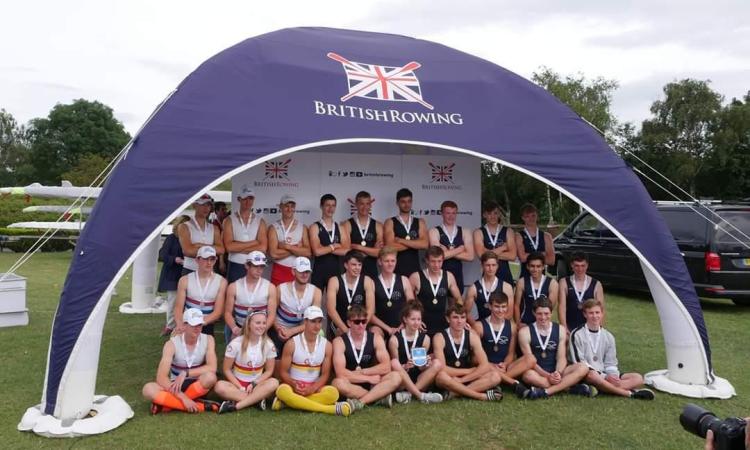
Student Rowing – Managing Time
Anyone who has rowed at a national rowing event, knows how tough the competition can be. To have a chance at getting medals at these events you have to not only be technically advanced as an individual or crew, but you also have to be physically powerful in order to shift the boat; this all requires time and effort to execute to the level necessary at national events. Student rowing has been at the heart of rowing since its creation as a sport, and is widely regarded as one of the most competitive areas to compete in, evidenced by The Boat Race and the Princes Elizabeth Cup at Henley Royal Regatta. Students often struggle to manage the demands of academic work and exams with the high intensity of competitive rowing at such a pivotal time in their lives. As a student, I have needed to manage my time, training for Races and keeping up with the pressures of A-Levels; I am going to share some of my methods, schedules and insights into how you can succeed, both as a competitive and academic rower.
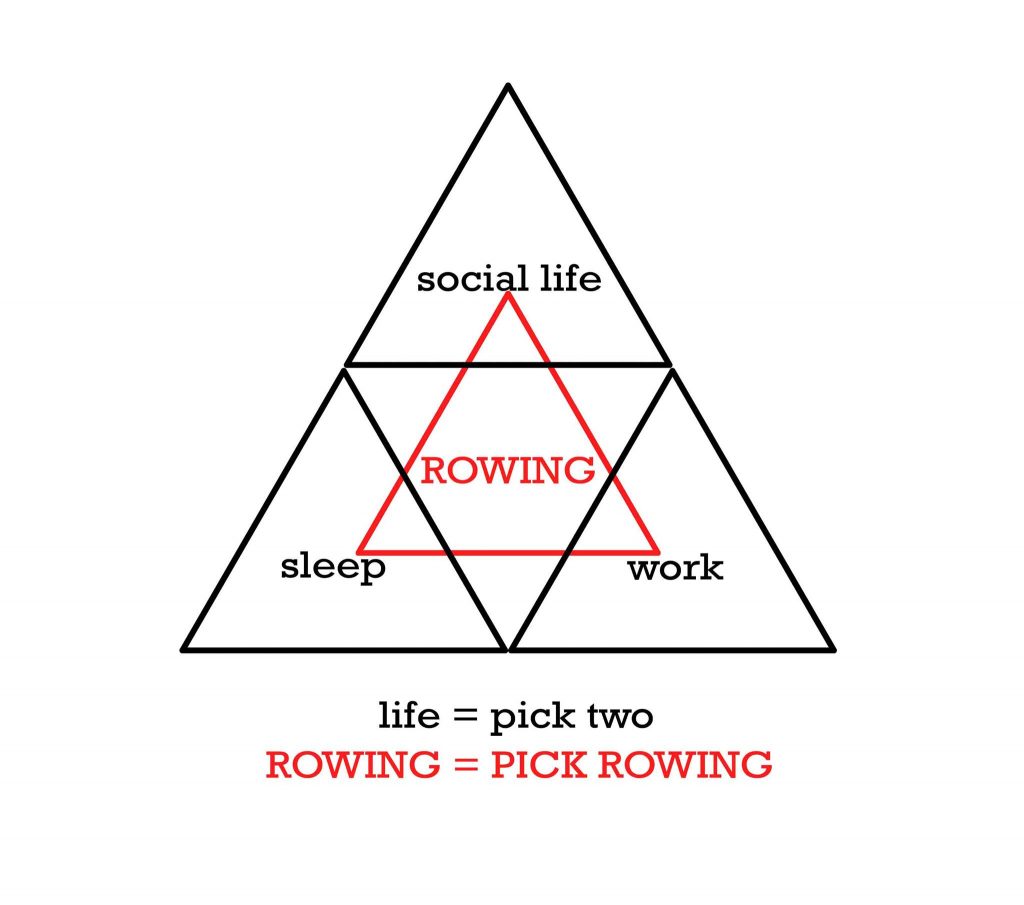
Training can be executed at any level of competitiveness, although having more academic commitments may mean you have to manage your time more strategically. Most coaches and rowers would like to believe that rowing is the most important thing in our lives during years as a student, but crucially the academic qualifications are more important. The 2012 and 2016 Olympic gold medallists in the Op2x- (pair), Hamish Bond and Eric Murray (NZL), train on average between 10 and 14 hr/week and have successfully achieved 2 Olympic titles, been unbeaten in 69 races between Olympiads and have successfully completed breathtaking feats on an indoor rowing machine, (concept 2 Ergometer). This 12 hr/week time responsibility is manageable on any level of academic commitment from 12 contact hours to 30. The Bond and Murray pair preach: quality of training over quantity. This requires, planning and organisation, a focused work ethic and an understanding that sacrifices may need to be made if you want to successfully challenge at a competitive level. I have created a three phase, 4 week rotation training plan based on my own training schedule, adapted from my coach, a former European champion:
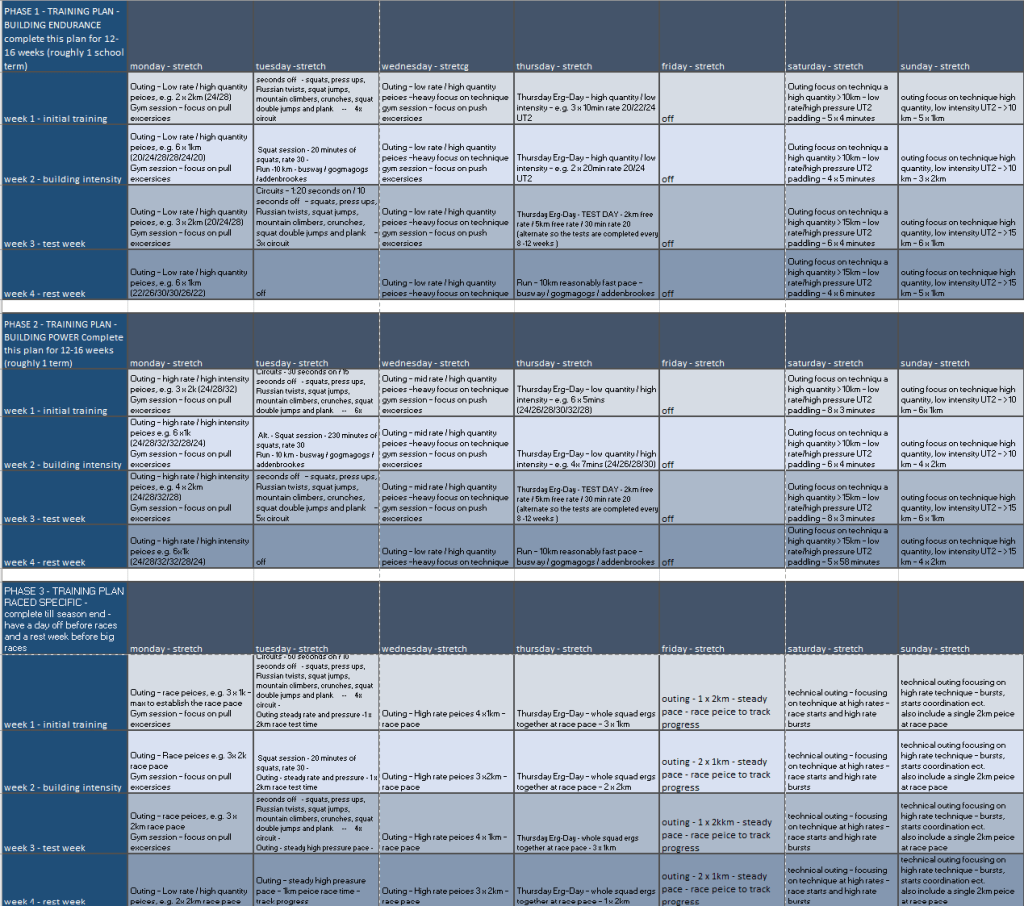
This training plan has on average 12 hours of training a week and takes inspiration from, the kiwi pair’s training, Cambridge university workout sessions and my own personal training plan, which I complete with a 29 hr/week academic commitment (14 of which are fixed within a timetable). I have aimed to make this training plan both achievable and flexible, but still allow for steady progress up to a national level. This is a complete flexible guide to training as a student and allows for you to prioritise school work while still achieving a national level, standard of training.
Structure: I have created a four week training rotation (similar to the kiwi pair’s), including two training weeks for focused progression, one test/training week to track progress and success and one rest week in which you maintain cardiovascular fitness while giving your muscles time to recover and strengthen and recover glycogen stores. I have also followed a 3 phase progression which is able to follow most college structures, a 3 term/semester system.
Phase 1: This initial training phase aims to build cardiovascular and muscular endurance through high volume, low intensity training. On the water, the aim is to focus on long pieces at a steady state (UT2), build this endurance and focus on cementing the key technical elements (Balance, Body Isolation and crew timing).
Phase 2: This second phase aims to build explosive power and strength through medium volume, high intensity workouts. This follows phase 1 because you should now have a good enough fitness/endurance level to deal with the higher intensity training, leading to greater success in this arguable more progressive phase. On the water the focus should be on high intensity pieces and improving more focused details technically (polishing the front end, clean finishes and blade work).
Phase 3: This phase focuses on race specific training, and in turn training is focused more on water sessions, although ergs and other training is still pivotal. Water sessions focus on race pieces and crew alignment within the boat, also bringing refined technicality to the higher rates. This is also where race starts should be incorporated and refined into pieces. Ergs should be done as a crew with the focus on finding rates, splits and race plans for major races coming up.
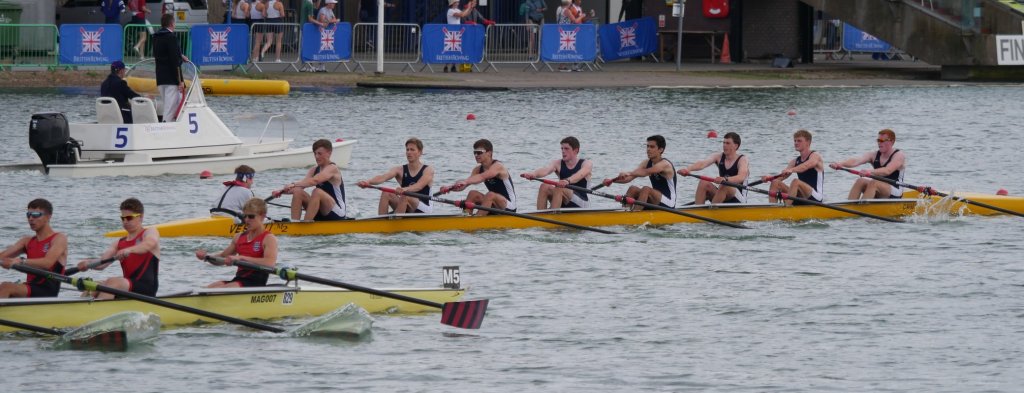
Rowing is one of the most competitive student sports and due to this, a high level of time commitment is necessary. Training at this level is manageable if you are organised and focused and willing to make sacrifices. Student rowing truly is at the heart of the sport and through these steps, it is achievable to challenge the top level crews at the prestigious national level of this unique rowing class.

