Heart rate training is a method of exercise in which you leverage your hearts functional response as an indication of workout intensity. Targeted Training is a great way to progress more quickly in your performance. By working specific areas, fitness, strength and endurance separately, they can be far more targeted and each make far quicker progress. Targeted training can be achieved through heart rate monitoring in order to calculate the level of exertion during exercise and measuring if this will target your aerobic capacity, anaerobic/lactate threshold or power output and building of strength.

There are many methods to calculate key zones or stats when it comes to heart rate training. The most common and easiest method is using your max heart and to find this you can either push our body to its max during a tough, sustained piece or you can do the less reliable method of subtracting your age from 220 (e.g. 23 year old has a max hear rate of 220-23=197 bpm). Using this, there are 3 key heart rates zones which are used to target different areas of physical capacity in order to improve performance:
- Zone 1 – Aerobic Training (UT2) : 50%-75% MHR
- Zone 2 – Anaerobic Training (UT1) : 80%-90% MHR
- Zone 3 – Red Line Zone : >90%
These are only estimates and in order to find more precise measurements for your heart rate zones more complex methods are required. Sadly, I don’t have time to cover them in this post but websites such as BritishRowing.org and RowPerfect.co.uk does have more detailed information on the subject

Zone 1 : Aerobic Training (UT2) is the best way to build fitness and this requires high volume, low intensity sessions.
Zone 2 : Anaerobic Training ( UT1) is the ideal intensity to build endurance as this works at your maximum sustainable intensity before lactate burnout occurs.
Zone 3 : The Red Line Zone is an intensity which cannot be sustained, this level is used to build explosive strength and is worked through low volume, high intensity interval Training (HIIT).
Lactate Threshold (Zone 2) – The lactate threshold is the maximal effort or intensity that an athlete can maintain for an extended period of time with little or no increase in lactate in the blood. It is an effort or intensity and not a specific lactate level. This is a key figure in your heart rate training because it is the maximum effort at which your body maintains your lactate levels so you can sustain this level without burning out. Burn out is a massive factor in your performance during races and is a barrier we all must hit and push through to achieve success. Training at or just below this threshold is the best way to prolong this point and improve your bodies ability to remove lactate, which in time will massively improve your performance at max levels.
Aerobic Training UT2 (Zone 1) – This low intensity training zone builds your general aerobic base which allows for you to complete the higher intensity training which will increase your boat speed. This intensity, in order to be effective, requires high volumes and is usually performed at a stroke rate of between 18 and 21. Elite Rowers have been recorded doing over 100km of zone 1 training a week in order to build the base aerobic fitness in order to handle the high intensity training they complete. This zone of training is the most important during phase 1 (building fitness and endurance levels) because this then allows you to complete effectively the higher intensity training.
Red Line Zone Training (Zone 3) – This intensity is unsustainable so is completed using intervals in order to get the volume necessary for development. It aims to increase strength, explosive power and the ability to perform at higher rates and speeds. This is most successful following phase 1 because you should have built the aerobic base which will allow you to complete effectively this increased intensity training. Sustained, regular training in zone 3 will drastically increase your strength and your ability to sustain comfortably high rates, both on the water or on a rowing machine.
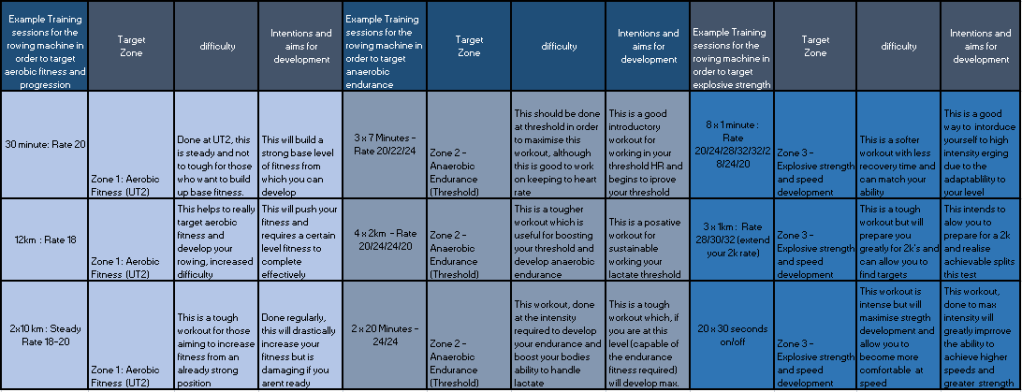
Suggested Erg Workouts – HR zones.xlsx
In order to maximise progress, through the year each of these three zones should be used in order to improve aerobic fitness, endurance and explosive strength for overall success. HR training is a great way to target specific areas of physical ability and promote maximal development. Heart rate targeted training is one way we can develop and is used by many elite athletes, although it is not the only option, it is highly recommended by sport scientists as the most targeted and accessible way of approaching physical development during training. I personally have found it greatly beneficial in order to train ‘smart’ and as a student maximise the restricted amount of training I am capable of around academic commitments. We all have restrictions and commitments and targeted HR training can be a great way to maximise your time training for optimal development.

